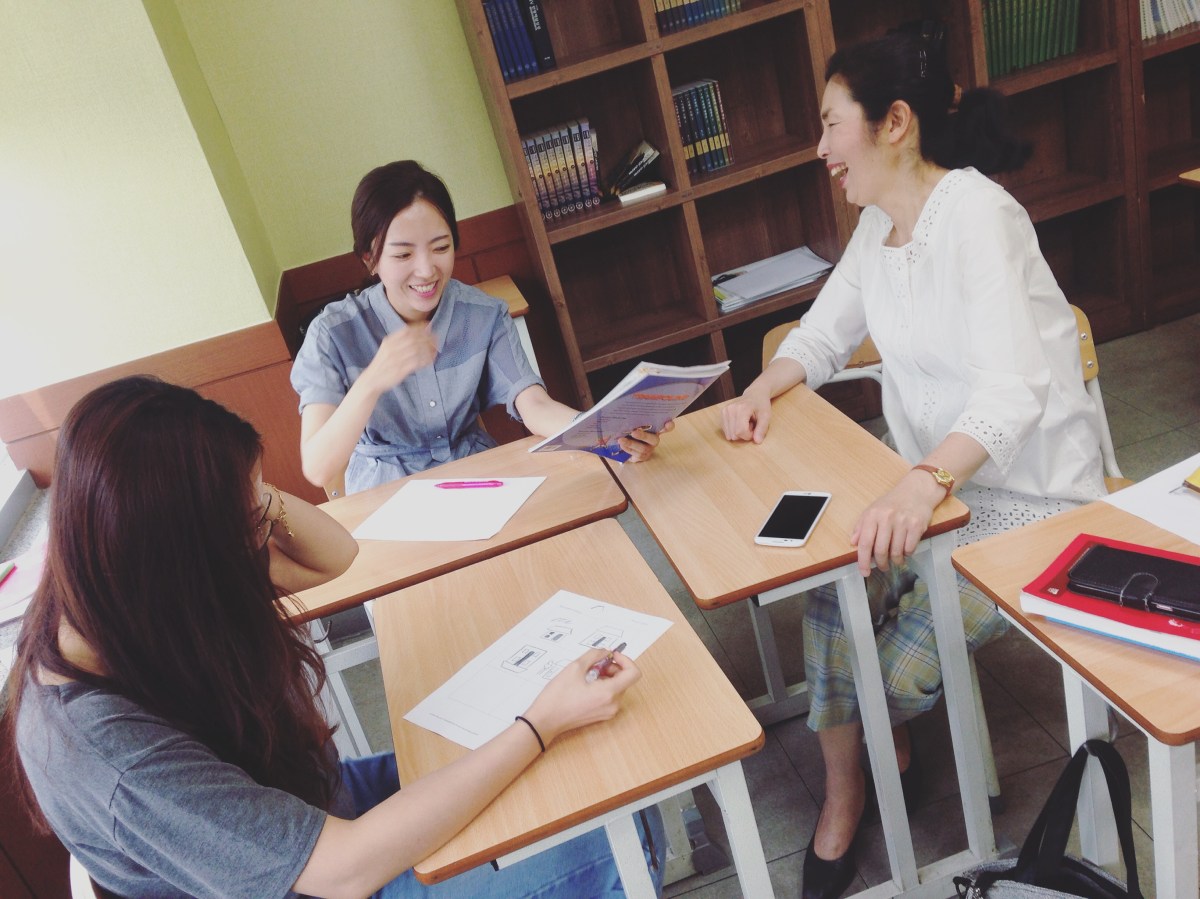
Teaching English in South Korea

It’s been about ten months since I began teaching English here in South Korea. The experience in the classroom  was initially very intimidating. Although I was trained, I was nervous and somewhat dreading that first term of teaching. Eventually, I got over the nervousness and improved on my teaching style. This is thanks to my coworkers and students who were willing to teach me and were very patient with me.

If you are interested in teaching English here in South Korea or just simply need another source of inspiration when it comes to teaching, here are some tips from me to you:

  1. Understand the basics of the Korean language. Although you can get away with not speaking the language when teaching them English, I found it much more effective to be aware of the basics of the Hangul pronunciation and sentence structure. Being aware of that allowed me to better help my students pronounce their words much better than when I didn’t know. I am able to also explain to them that there is a difference between “fun” and “funny” (they use the same word in their language. My students tended to confuse them both often).
  2. Understand how sounds are being formed in your mouth. If you are able to show and explain how to do this right, it makes pronunciation much more easier for them. for example, in Korean, they have no differentiation between “R” and “L” as in their alphabet, it is represented by the same symbol. Note that for the “L” pronunciation, the tip of the tongue toes to the roof of the mouth, whereas for “R,” the tongue touches nothing.
  3. Grammar matters. Know the basics so you can explain well. Plus, students tend to hunt you down with a grammar question.
  4. Don’t be afraid to correct your students when they speak. Even if they’re mid-sentence. Be proactive in their learning so it would let them know that they are being looked after.
  5. Be patient. Not only with your students but also with yourself. You’ll learn the ropes of teaching soon enough as you continue to teach. But if you’ve already been teaching for a while, remember to be patient and forgiving with yourself. Not only will your students appreciate you for your patience, you will also appreciate yourself for doing so.
  6. Be brave. Don’t be scared when your students speak in Korean and you have no idea what they’re saying. They’re just helping each other clarify things – especially when you cannot.
  7. Smile. Show them that you’re enjoying spending time with the class and the work you’re doing. If you look like you’re enjoying yourself, your students can relax and enjoy too. (They are nervous themselves!).
  8. Pray for them and their success. And let them know that you’re doing so!

Hope these tips are helpful to you! Have something to share? Let me know!
– A

Lesson’s from July 2016

Self-improvement and continuous growth from personal experiences is what I’ve been seeking ever since… forever. This past month was a bit more special when it comes to self-taught lessons.

When the new term began, many things were flung my way. Longer working hours, more job-related responsibilities, and making some tough life decisions. This past month has definitely been a rollercoaster and I’m fortunate to have family and friends here and back home who were willing to be a listening ear to this gal. I mean, I am human and do constant need of advice from my peers…

So here are the following lessons I’ve learned this  month.

  1. Work-life balance is definitely a huge deal for me. Before the beginning of this term, my working schedule was tolerable. But now… let’s just say that it’s been quite tough. During the lectures I’ve attended in college, my professors have repeatedly emphasized the importance of a work-life balance. It is a very important aspect that organizations should respect towards their employees. I never realized just how true those lessons were until I now live such an unbalanced life-style. As much as I love teaching my students and seeing them improve on their conversational skills, I’d like to have a life separate from work. Not live and breathe for work. Because of the working culture here in Korea, I can see and understand why this culture became so. South Korea is a country that quickly turned its economy around after several tough years. The importance of hard-work and supporting self can still be witnessed to this day. But this recipe isn’t for me.
  2. Time is currency. Spend it wisely. Because I now work longer hours, spending time on the WHAT is important. I had to revisit what things were important to me and came out with the following: health, sleep, and sanity. In addition, I’ve become much more selective of WHO I spend my time with. So… note that if I spend time with you outside of work, just know that you must be pretty darn special...
  3. Invest on having a special skill. This past month, I’ve been teaching English 1:1 to a lady who has an age in which many normally retire. But since she has a special skill, she’s still working and is in demand for it. She’s loving it and traveling around the world with it. Life goals can I say?
  4. Have a hobby and keep it. Back to the same woman I’ve been teaching 1:1 to – she doesn’t just focus on her specialty, she also has a couple of hobbies; learning English and memorizing and writing poetry. She’s the type of woman I’d like to be when I’m older. Unfortunately, since I’m still learning how to balance my life and am lacking inspiration, I haven’t had the chance to be very creative (specifically the YouTube aspect…)

So there it is – the four lessons I’ve learned this past month. What lessons have you been learning yourself?


-A

Of Having a Female Mentor

At the end of last quarter, I signed myself up to join a mentoring program that my friend, Maddy, set up. I was paired up with the VP of Enrollment and Marketing here at school. Before our first meet up, I was honestly intimidated. I mean, I’m about to meet one of the VP’s of my school!

Now, I need to share with you that I do have mentors. Two are in my department and one who travels around wherever the music goes. And they are all men. When I met my appointed mentor, one of the first things I shared with her about what I wanted out of this relationship, was that I needed that female perspective that my male mentors lack. So our conversations can range from anything to everything.

Meeting her for the first time was intimidating, but as we continued to talk, she’s a very energetic lady, who wants to have as much impact on the student’s life here on campus as much as our professors. The only thing that has kept her from truly doing that was that she rarely has that interaction that professors have. So when Maddy introduced this mentorship program, she was more than ready to grab onto this opportunity. On top of that, she loves Filipino food and culture. One of the few Caucasian individuals I know who appreciate Filipino food…

But back to our first meeting; we were talked about her career and how certain moments have lead her to our school. I’ve shared with her my worry of finishing school and life after college. Before we ended our meeting, she left me with the following insights:

  • What new skill do you want to learn? How can you use it to support yourself?
  • When you’re in a new environment (like a job), give yourself three years. It is allow you to understand the environment, culture, and the job, so when it comes to the third year, you are set!
  • When you’re speaking with your friends, don’t be afraid to share that you’re looking for a job – and tell them exactly what you’re looking for.

After speaking with her, I’ve taken up sewing (also because I’m a fashion designer for a charity event here at school – but story time at a another time…) and I’ve refreshed my Instagram to give it a new purpose. Those were the two things that have inspired me to do something new and different. Otherwise, I’m still working on the rest of her insights.

But keep posted! I’ll be sharing more of what she and I will talk about in all our hangouts. Hopefully you’ll learn something along with me – as I dig through her wisdom.