Stickers 

A student walked into the institute today with his arms covered in stickers. Turns out that his children put those stickers on him. It was so adorable that he didn’t bother to remove them when he came to attend his class. It’s as if he’s proud of the fact that his children just decorated him.

After a brief chat, he then went ahead, took one sticker off his arm, and placed it on my arm. 

Teaching English in South Korea

It’s been about ten months since I began teaching English here in South Korea. The experience in the classroom  was initially very intimidating. Although I was trained, I was nervous and somewhat dreading that first term of teaching. Eventually, I got over the nervousness and improved on my teaching style. This is thanks to my coworkers and students who were willing to teach me and were very patient with me.

If you are interested in teaching English here in South Korea or just simply need another source of inspiration when it comes to teaching, here are some tips from me to you:

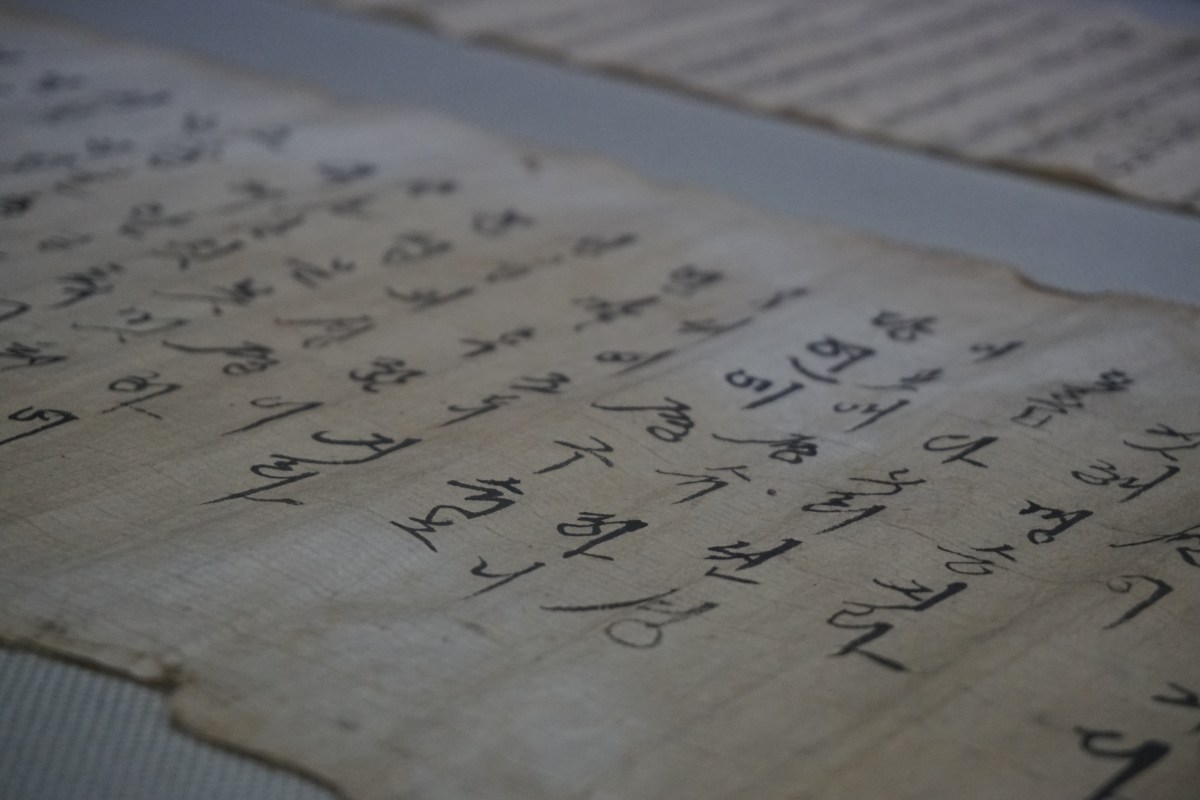
  1. Understand the basics of the Korean language. Although you can get away with not speaking the language when teaching them English, I found it much more effective to be aware of the basics of the Hangul pronunciation and sentence structure. Being aware of that allowed me to better help my students pronounce their words much better than when I didn’t know. I am able to also explain to them that there is a difference between “fun” and “funny” (they use the same word in their language. My students tended to confuse them both often).
  2. Understand how sounds are being formed in your mouth. If you are able to show and explain how to do this right, it makes pronunciation much more easier for them. for example, in Korean, they have no differentiation between “R” and “L” as in their alphabet, it is represented by the same symbol. Note that for the “L” pronunciation, the tip of the tongue toes to the roof of the mouth, whereas for “R,” the tongue touches nothing.
  3. Grammar matters. Know the basics so you can explain well. Plus, students tend to hunt you down with a grammar question.
  4. Don’t be afraid to correct your students when they speak. Even if they’re mid-sentence. Be proactive in their learning so it would let them know that they are being looked after.
  5. Be patient. Not only with your students but also with yourself. You’ll learn the ropes of teaching soon enough as you continue to teach. But if you’ve already been teaching for a while, remember to be patient and forgiving with yourself. Not only will your students appreciate you for your patience, you will also appreciate yourself for doing so.
  6. Be brave. Don’t be scared when your students speak in Korean and you have no idea what they’re saying. They’re just helping each other clarify things – especially when you cannot.
  7. Smile. Show them that you’re enjoying spending time with the class and the work you’re doing. If you look like you’re enjoying yourself, your students can relax and enjoy too. (They are nervous themselves!).
  8. Pray for them and their success. And let them know that you’re doing so!

Hope these tips are helpful to you! Have something to share? Let me know!
– A

Lesson’s from July 2016

Self-improvement and continuous growth from personal experiences is what I’ve been seeking ever since… forever. This past month was a bit more special when it comes to self-taught lessons.

When the new term began, many things were flung my way. Longer working hours, more job-related responsibilities, and making some tough life decisions. This past month has definitely been a rollercoaster and I’m fortunate to have family and friends here and back home who were willing to be a listening ear to this gal. I mean, I am human and do constant need of advice from my peers…

So here are the following lessons I’ve learned this  month.

  1. Work-life balance is definitely a huge deal for me. Before the beginning of this term, my working schedule was tolerable. But now… let’s just say that it’s been quite tough. During the lectures I’ve attended in college, my professors have repeatedly emphasized the importance of a work-life balance. It is a very important aspect that organizations should respect towards their employees. I never realized just how true those lessons were until I now live such an unbalanced life-style. As much as I love teaching my students and seeing them improve on their conversational skills, I’d like to have a life separate from work. Not live and breathe for work. Because of the working culture here in Korea, I can see and understand why this culture became so. South Korea is a country that quickly turned its economy around after several tough years. The importance of hard-work and supporting self can still be witnessed to this day. But this recipe isn’t for me.
  2. Time is currency. Spend it wisely. Because I now work longer hours, spending time on the WHAT is important. I had to revisit what things were important to me and came out with the following: health, sleep, and sanity. In addition, I’ve become much more selective of WHO I spend my time with. So… note that if I spend time with you outside of work, just know that you must be pretty darn special...
  3. Invest on having a special skill. This past month, I’ve been teaching English 1:1 to a lady who has an age in which many normally retire. But since she has a special skill, she’s still working and is in demand for it. She’s loving it and traveling around the world with it. Life goals can I say?
  4. Have a hobby and keep it. Back to the same woman I’ve been teaching 1:1 to – she doesn’t just focus on her specialty, she also has a couple of hobbies; learning English and memorizing and writing poetry. She’s the type of woman I’d like to be when I’m older. Unfortunately, since I’m still learning how to balance my life and am lacking inspiration, I haven’t had the chance to be very creative (specifically the YouTube aspect…)

So there it is – the four lessons I’ve learned this past month. What lessons have you been learning yourself?


-A

Learning 한굴 (Korean)

안넹하세요! It’s been a while since I’ve shared about how my life has been here in South Korea. Well, it’s been a busy past two months and we’re wrapping up the current term while looking forward to the short break.

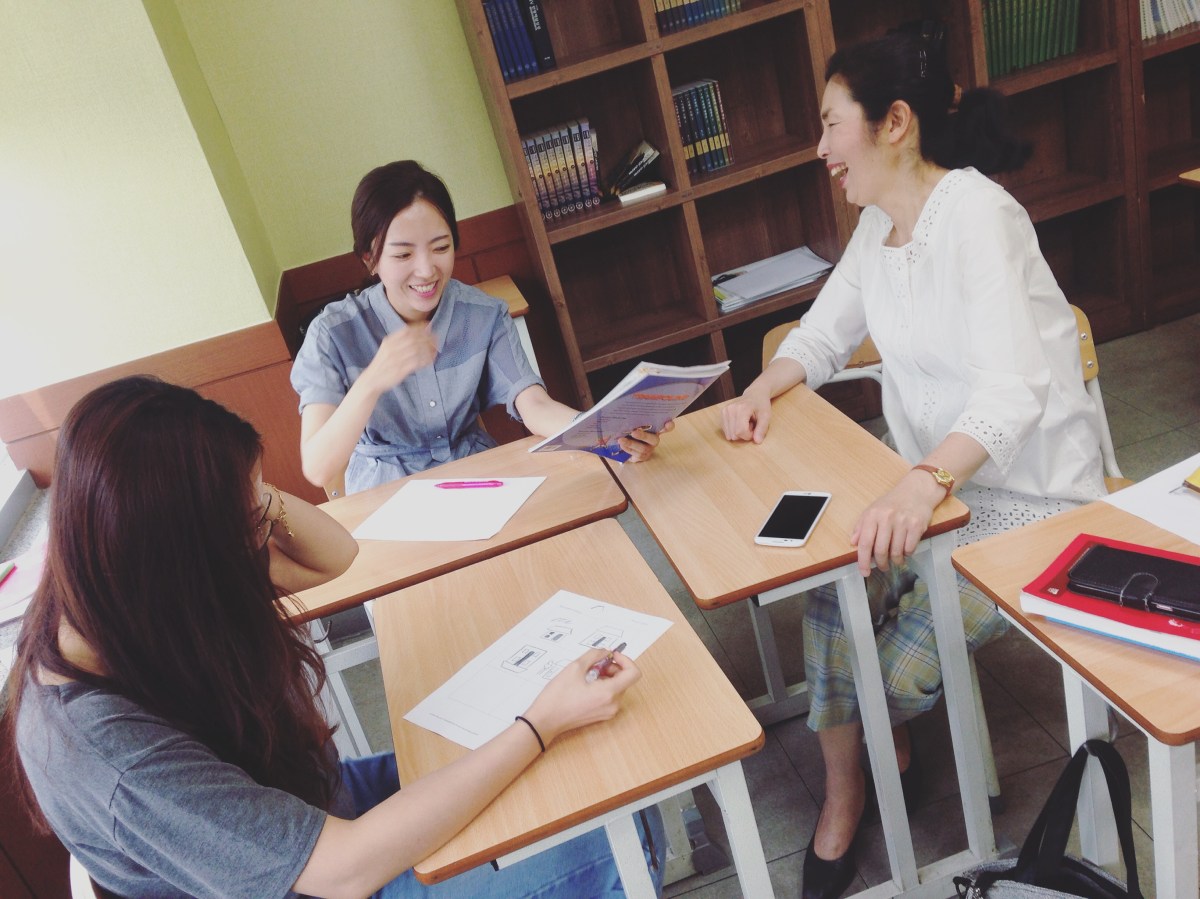
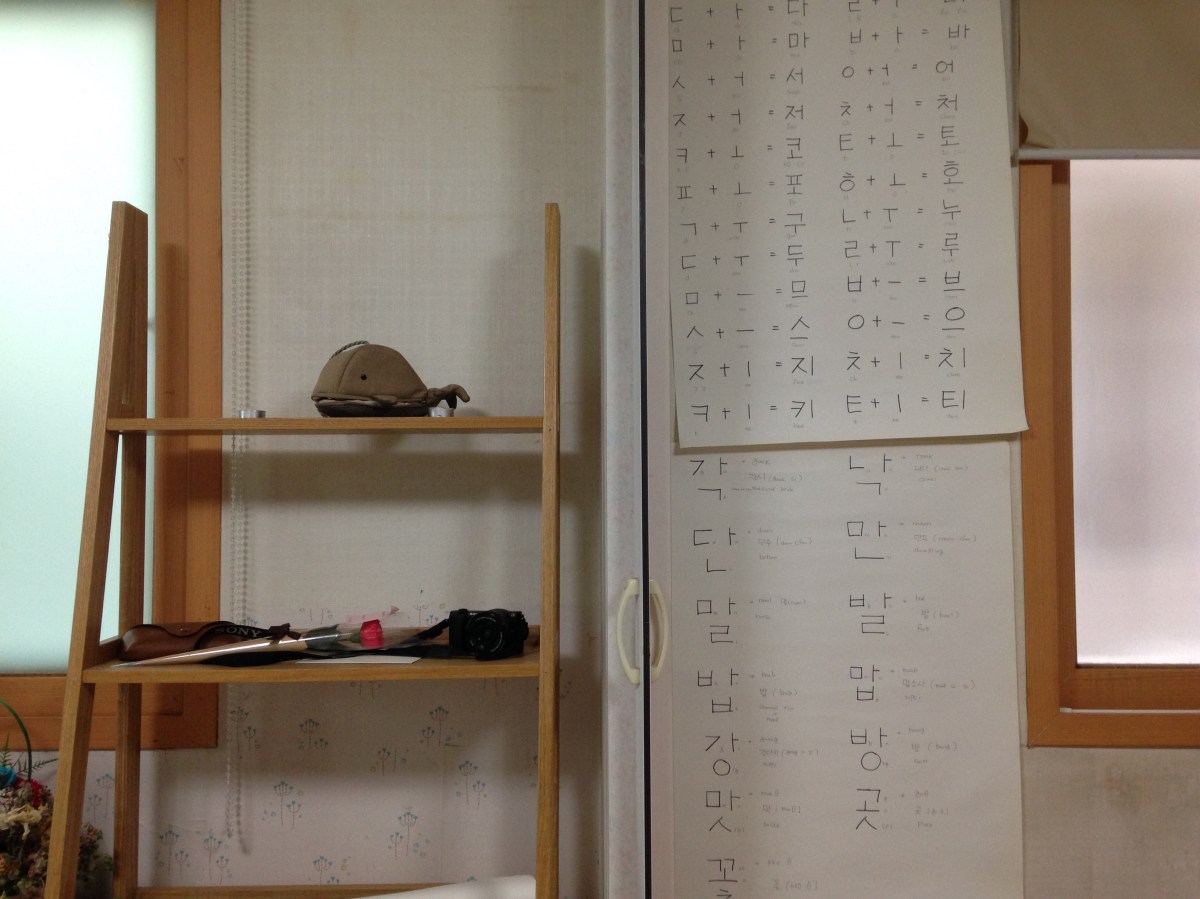
Since the beginning of this term, I’ve been putting more effort into learning Korean. So when I sent a message to 아리 (Ari) about helping me, I was very lucky that she said “Yes”. 소비 (Sophy), 아리’s best friend, has joined us. Both ladies were actually my former students. Thus begins an exchange program where they both co-teach me how to read and speak, and I help them improve their conversational skills.

This experience has been teaching me the following:

  1. Pronunciation is IMPORTANT. You are one sound away from saying “a three-wheeled bicycle” (세발자전거) to a very bad word…
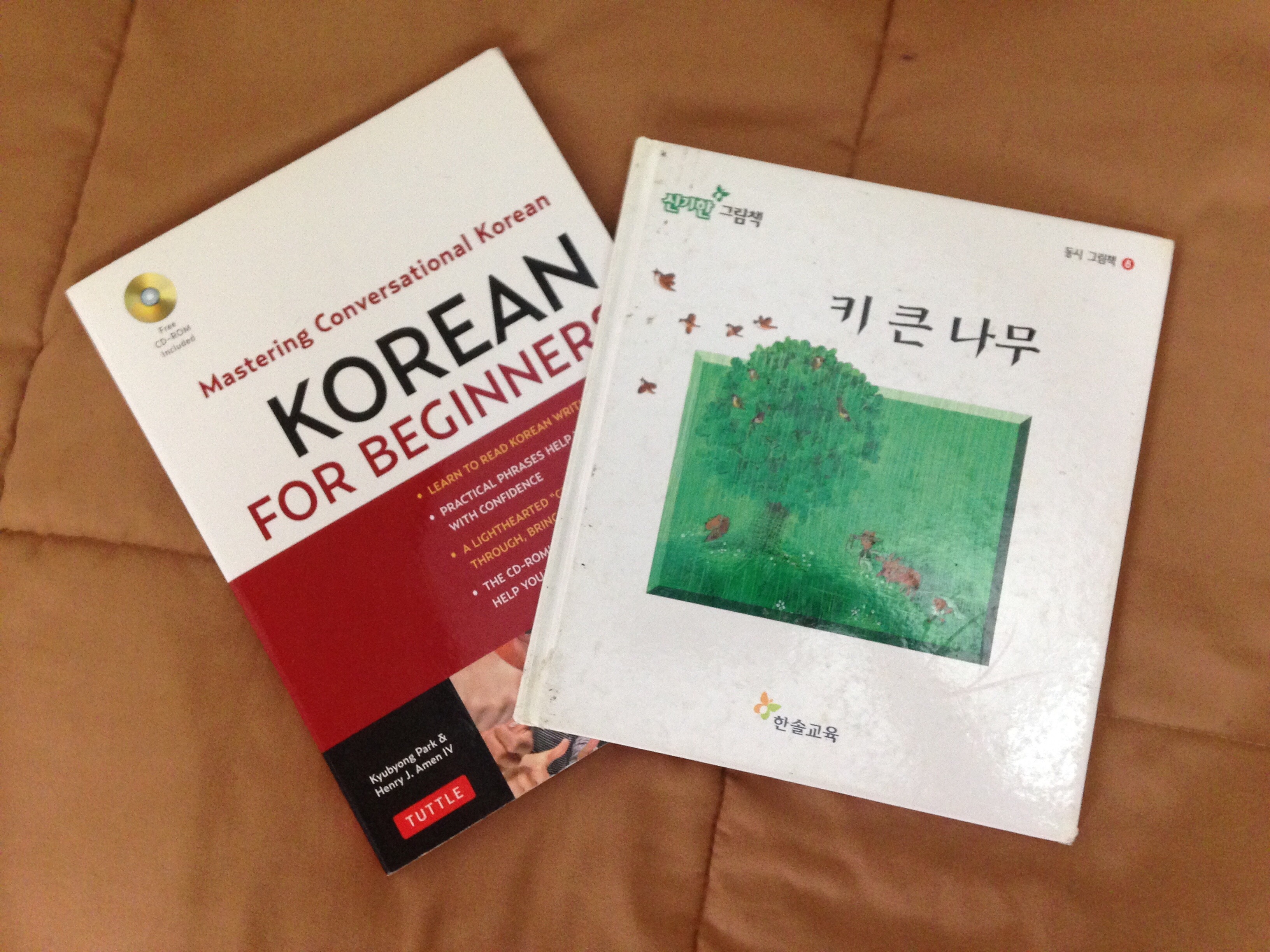
  2. Grammar is quite different between 한굴 and English. For example, “할아버지다 오레산 키쿤나무” reads out to be “grandfather is older than tall tree” when in reality it means the reverse: “Tall tree is older than grandfather.” So one moment as I pull out my “Korean for Beginners” and review things…

We’ve been meeting once a week and I’m enjoying the laughter and stories we’ve been sharing between us.

Learning from a textbook and a children’s picture book.

So here’s to my slow, yet steady, learning.


-A


P.S. I’ve accomplished Day 36/100! Check out my Instagram of what those 36 moments and things are.


Entering that seventh month of teaching…

I can’t believe that it’s been seven months since I began teaching here in South Korea. As cliche as it sounds, time does fly!

IMG_8433.JPG

Whilst reviewing my notes and doing my preparations for my adult classes tomorrow, I came across the notes I wrote down for myself during my training. One note that stood out the most was a verse from Philippians:

Don’t worry about anything; instead, pray about everything. – Philippians 4:6

I remember how nervous I was when I was writing these notes down! I wanted do well on my mock-teaching and the real teaching that came after that. Now, I barely even need these sticky notes. Experience, Time, and several awesome people have been my teachers these past months. As always, I’m filled with gratitude for them.

So as this new term begins, here’s to new lessons and improving myself.

A

A Novice English Teacher’s Frustration About…

“Shocked” is the perfect word to describe what I am feeling right now. Let me explain…

For some reason, in one of my Junior classes, we are ahead of schedule with our class material. Because of that, I opted for a fun and competitive activity with this small class today. The activity: whoever writes a sentence with proper grammar, proper use of the word(s) given, and correct spelling, shall earn points. Ten points respectively for each action done correctly. The prize – a 2016 planner. Otherwise, everyone shall receive a choco-pie (really delicious stuff, I tell you).
Also, because I am an English teacher and I’m trying to encourage these kids to stop speaking Korean in class, I deduct 50 points for each time a student decides to speak in Korean. I know, it’s drastic – but with these kids, it’s necessary.
So the game began. Many were tied, and yet are sweetly improving their creative writing. Time came up for the the class to end and suddenly, the only boy in the class spoke in Korean. Minus 50 points. 
Before I continue, let me give you a little bit of background about my relationship with these kids: we are chill. I joke around. They joke around. We get the work done. It’s a good day. All in all, I trust them until they give me a reason not to (like the other day, I allowed them to watch a video on the premise that it was related to the material and that it was going to be in English. It was related to the material – air pollution – however, it was a short animation in Korean. Figures). Bottom line: we chill.
However, I’m currently unsure about whether or not I should trust these kids anymore. This recent action has led me to believe that they think I find everything to be funny and I cannot be taken seriously. Well, you see, the student whom I just deducted 50 points from for speaking Korean, decided that it was funny to steal the prize and run out the door. The whole class thought it was funny and laughed right out the door. I was hoping that the thief would run back and return the item within a matter of minutes. But he didn’t.
Shocked. Disappointed. FRUSTRATED.
Which then leads me to ask this question:
Should teachers also be responsible in teaching children morality in the classroom or should we just leave that responsibility to their parents or guardians?
As a foreign teacher, it is advised that when it comes to situations such as disciplining, I should just leave it to my Korean co-teacher because of the cultural and language barrier. Easy. But now it leaves me with another situation – RESPECT. If I leave it to my co-teacher to solve the issue, how am I to create an environment of respect – not only for myself, but also to each other?
As for now, I don’t know. It’s a matter of continuous prayers and of me and my co-teachers to collaborate what the next best step should be.
They say that this younger generation doesn’t understand and practice respect as much as the older generation. I hope that immorality isn’t added into that list.

Teaching Style

Screen Shot 2016-02-08 at 9.59.36 PMI never saw of myself as an educator. I never imagined finding myself teaching English, especially in another country. Luckily, by divine providence and by fate, I’m surrounded by some amazing people whom I am able to learn from. These past two terms (four months) are memorable.

In the institute that I’m currently teaching at, there are four foreign teachers teaching the adult English classes: Chad, Maddy, Patricia, and I. We assist three Korean teachers (Henry, Jessica, and Nina) when it comes to teaching the Juniors (ages 8-14) in the afternoon.

Although I have definitely learned something through my Korean co-teachers, most of the lessons I’ve learned are from my foreign co-teachers:

IMG_4971
From left to right: Maddy, Chad, and Bruce – a student and friend
  • Chad: his teaching style is to be aware of the student’s strengths and weaknesses. His “be a friend” approach is very admirable as it is very intimidating for me. Since many of my students are way older than me (think mom, dad, grandparent status…), I tend to hide behind the Korean respect hierarchy. His approach, from what I’ve noticed, has allowed his students to be comfortable and open around him. I often envy the laughter that comes out of his class.
  • Patricia: love this lady and her “take it easy” approach. Her constant reminders to relax and not overthink things reminds me that “Hey, I already have the materials to teach, in my hands.” Also, her presence and beginning the day with a word of prayer has helped further established God’s presence in my life and in the workplace. Lastly, her hugs are amazing – especially in this country where hugs are seen as kind of… awkward…

    DSC01085
    Maddy, probably asking “why”.
  • Maddy: this girl puts me to shame. She is an educator who doesn’t want to settle. Her favorite question is “Why?”. I’ve adopted that three letter word into my vocabulary – much to the disappointment of many of my students. My students think they’re off the hook after answering my question in a sentence or two? Not so quick… Aside from that, her constant desire to learn and prep-work (which Patricia often teases her for giving herself more work than necessary), encourages me to do the same. With her example, I’m able to find ways to make the learning environment for my students more enjoyable.

I’m truly grateful to have these three people around. Sadly, this is Chad and Patricia’s last term in Sangmu Gwangju branch. I’ve gotten quite fond of them and wish they’d stay longer, but they have their own things to do and places to explore. With them leaving, I’m even more grateful that Maddy and I are placed in the same institute. At least there is one constant person, ya know?

But with new faces about to come to the Institute, at least it will encourage me to learn some more and not settle.